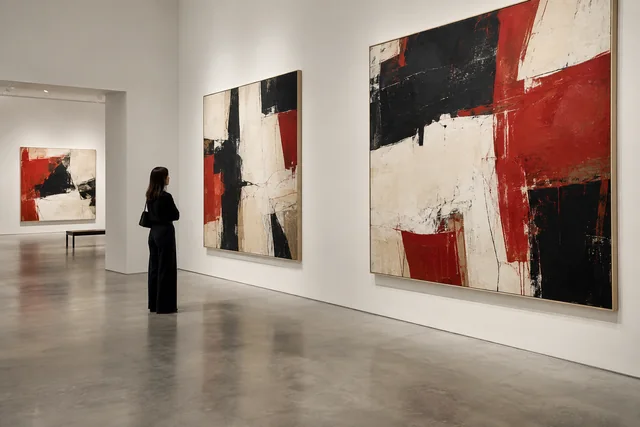
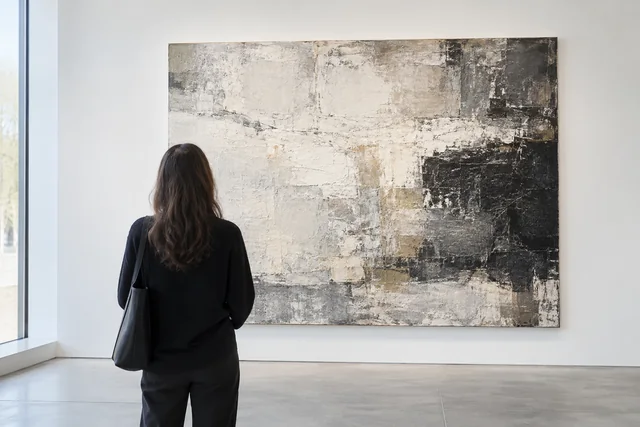
An object changes when the room changes
An artwork is encountered in a setting. Light, spacing and the path through a room influence what becomes visible and how long a visitor spends with it. Display is therefore part of the conversation around the object.

Consider the first encounter
Think about the distance from which the work is first seen and what sits within the same view. A crowded entrance can make a subtle piece difficult to notice. Give the visitor a clear path and enough room to pause without blocking others. Access and safety requirements need to be resolved alongside the visual arrangement.
Use light with care
Lighting should make the work legible while respecting the material’s conservation needs. These requirements need appropriate specialist guidance for real objects. Avoid assuming that a dramatic spotlight is suitable for every surface. Reflections, shadows and changing daylight can affect both the work and the visitor’s ability to see it.
Test the sequence in person
Walk the room from several directions and at different heights where possible. Check labels, sightlines and the relationship between pieces. A plan or rendered image cannot reveal every aspect of an actual installation. Invite feedback from people who did not prepare the display. Their route through the room may reveal a hidden label or a difficult view that familiarity made easy for the installation team to overlook.